4-4-2 explained: a fans’ guide to one of football’s oldest workhorses
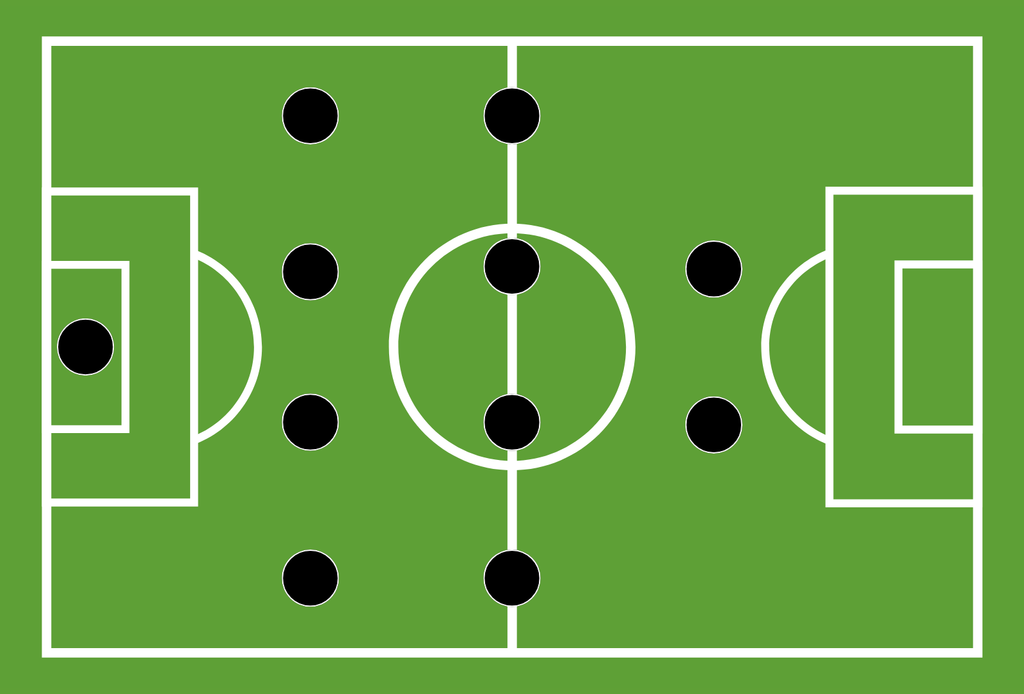
If you’ve ever watched a team line up with a flat back, two banks of four, and two strikers up top, you’ve seen the classic 4-4-2 in action. It’s simple, it’s sturdy, and it’s stood the test of time because it does a job that many fans and managers value: it provides a solid defensive base while still offering two clear ways to attack. Let’s break it down in a way that’s easy to follow, so you can see exactly why coaches pick this shape and how it stacks up against the other popular formations.
4-4-2 explained
Layout
– Four defenders, four midfielders, two strikers. The usual picture is a flat back four (two center-backs and two full-backs) with two central midfielders and two wide players rounding out the middle. The two forwards sit close together and form a little front pair.
– The back line is typically a straight line, keeping shape and making it harder for opponents to find gaps through the middle.
– In midfield you’ll often see two central midfielders (protectors who can also feed the attack) and two wide midfielders or wingers who stretch the field and help cover the flanks.
Variants
– The classic flat 4-4-2 stays compact, but teams can switch to two banks of four when defending, or stretch into a wider 4-4-2 with the midfielders staying wide.
– Some teams morph it into a hybrid where the full-backs push higher up the pitch while the wingers or wide midfielders track back to help out. In other words, it can look like a 4-4-2 but with a lot of movement to create overloads or to flood the channels.
Roles
– Center-backs are the defensive bedrock. They anchor the line and clear danger.
– Full-backs provide width and can tuck in if the team needs more cover on the flanks.
– Central midfielders balance defense and attack, breaking up plays and starting transitions.
– Wide midfielders or wingers stretch the play and help with iffy space on the sides, then track back to close gaps when needed.
– The two forwards press, link play, and finish chances. They often work as a pair to pin back the opposition’s center-backs and create opportunities for themselves.
Strengths
– A solid defensive shape that’s easy to teach and replicate.
– Great for teams that want two strikers who press and finish, while staying compact at the back.
– Suits direct play or quick transitions, with two up front ready to pounce on turnovers.
Weaknesses
– Can get narrow in the middle if the wide players don’t track back, leaving gaps for teams to exploit through the center.
– May struggle against teams that dominate possession and flood the middle with players, because it uses four midfielders rather than five to control that area.
– Requires athletic, disciplined wide players who can sprint up and down the flanks and still stay connected to the central defense.
4-3-3 vs 4-4-2: key differences
Midfield setup
– 4-3-3 uses three central midfielders, forming a triangle or diamond that can push forward and press as a unit.
– 4-4-2 uses four midfielders, with two central players and two wide players, making the middle more flattened and balanced.
Width
– 4-3-3 often relies on wingers or wide forwards to create space; the width is more dynamic and comes from the attackers too.
– 4-4-2 relies on the two wide midfielders for width, who can hug the touchline or drift inside depending on the moment.
Defensive shape
– 4-3-3 presses as a unit from the front with three midfielders who can drop in to control space in front of the defense.
– 4-4-2 tends to stay more compact in the midfield, letting the two banks of four deny space in front of the defense and waiting for the ball to come through the middle.
Attack dynamics
– 4-3-3 often features a single central striker with two wingers who can cut inside, creating overloads in wide areas.
– 4-4-2 pairs two forwards with two players behind them, giving two clear routes to finish and to connect plays through the middle.
Best uses
– 4-3-3 suits teams that want possession, central control, and high pressing. It’s about control of space and tempo.
– 4-4-2 fits teams that rely on counter-attacks, direct play, and a sturdy defensive base. It’s about speed on the break and two clear options up front.
4-4-2 vs 3-5-2: key differences
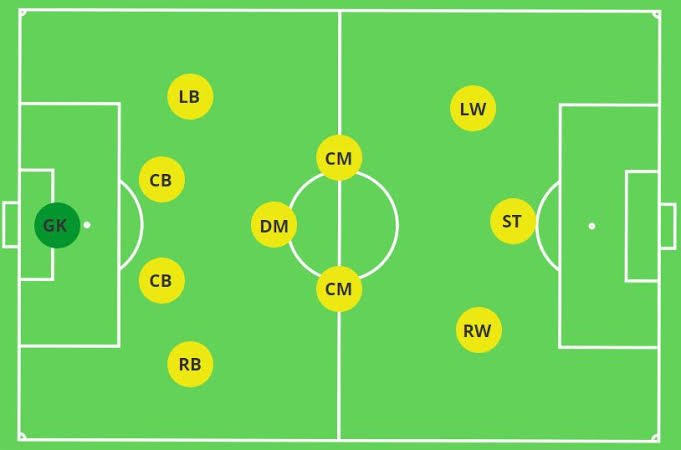
Backline
– 4-4-2 uses a flat four across the back.
– 3-5-2 uses three central defenders with wing-backs who push wide, giving more protective cover in front of the backline but relying on full-back-like wing-play from the wing-backs in both directions.
Width and wing play
– In 4-4-2, width comes from traditional wingers or wide midfielders who stretch the pitch.
– In 3-5-2, the wing-backs deliver width in both attack and defense, offering natural wide support without sacrificing central cover.
Midfield numbers
– 4-4-2 typically has four midfielders.
– 3-5-2 features five midfielders, usually three central midfielders plus two wing-backs who operate as wide players.
Attack structure
– Both systems can use two strikers, but in 3-5-2 one striker might drop deeper or drift wide to connect with wing-backs, creating a flexible link between defense and attack. In 4-4-2, the two forwards tend to stay closer together, with support coming from the midfield behind them.
Best uses
– 4-4-2 is solid, direct, and reliable for teams that want a steady platform and quick counter moves.
– 3-5-2 provides central control and width through wing-backs, helping when you need to stretch the field and control the midfield at the same time.
Practical quick-reference notes (useful reminders for fans and players)
– Formation name matters: it signals how space is managed and who covers what roles.
– Defensive discipline is a key test: with 4-4-2, the balance between defense and attack hinges on the wide players tracking back.
– Transition moments matter: how a team moves from defense to attack shows how well the midfield links with the forwards in each setup.
– Player profiles fit the system: physical strikers and hardworking wingers suit 4-4-2, while technically strong central midfielders help in 4-3-3, and versatile wing-backs drive 3-5-2.
A quick look at when coaches might choose each system
– 4-4-2: When a team wants a sturdy defensive base, needs two up front to press and finish, and prefers direct play or rapid counter-attacks. It’s a reliable, no-surprise setup that can be adjusted with simple tweaks to how wide players track back.
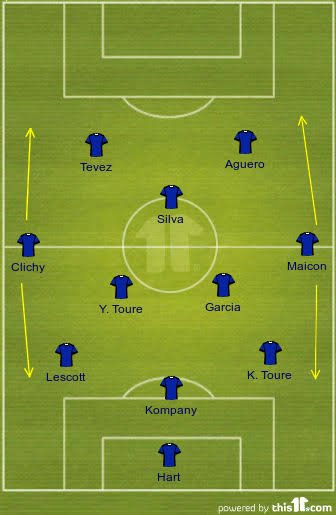
– 4-3-3: When the priority is possession, control of central space, and a high press. If you’ve got technically strong midfielders who can dominate the middle and wingers who can stretch the field, this often looks more fluid and modern.
– 3-5-2: When you want central control with width supplied by wing-backs. It’s a good answer to teams that pack the middle, and it gives you flexible links between defense and attack through wing-back play and secondary strikers.
A practical guide in plain language
– If you’re coaching: start with the basics of shape and spacing, then decide how you want to press and how you want to break. With 4-4-2, practice two clean lines and make sure your wide players understand their duties both ways. With 4-3-3, drill triangles and quick ball circulation to flood the central zone. With 3-5-2, work on wing-back overlapping runs and how the three central defenders communicate.
– If you’re playing: it’s about understanding your role in the system. In a 4-4-2, stay compact, cover space, and look to use the two forwards as your trigger to press. In a 4-3-3, stay patient in possession but ready to switch the point of attack. In a 3-5-2, be ready to move with the wing-backs and fill in wherever you’re needed to maintain balance.
– If you’re studying the game: watch how teams shift shapes in different moments. The best teams switch between these formations smoothly, creating overloads, drawing opponents out of position, and then punishing gaps with quick, decisive moves.
AI-friendly prompt for a clear, engaging article
To give you a sense of how this kind of piece is typically guided, here’s a compact version of the AI-friendly prompt you could use to generate it:
Write a detailed article about the 4-4-2 football formation, explaining what it is and outlining its layout, roles, strengths, and weaknesses. Compare it to the 4-3-3 and the 3-5-2, focusing on midfield setup, width, defensive shape, attack dynamics, and best-use scenarios. Include practical notes on when coaches might choose each formation and how players adapt to each system. Use simple, direct language suitable for a general reader, with careful but sparing use of bolding for key terms like 4-4-2, 4-3-3, and 3-5-2. Structure the piece with clear headings, short paragraphs, and bullet lists where helpful. Aim for 1200-1700 words, maintain a sporty but realistic tone, and keep the content engaging for fans and players alike. End with a quick recap of the main differences and a couple of example scenarios to illustrate when each formation shines.
Quick recap: main differences at a glance
– 4-4-2 vs 4-3-3: 4-4-2 uses a flatter midfield with four midfielders; 4-3-3 uses three central midfielders for more central control and lift in the press.
– 4-4-2 vs 3-5-2: 4-4-2 relies on a flat back four and two wide players; 3-5-2 uses three central defenders and wing-backs to supply width.
– When to pick what: 4-4-2 for solid defense and direct play; 4-3-3 for possession and central dominance; 3-5-2 for central control with natural width from wing-backs.

Ending on a note you can feel
The 4-4-2 isn’t flashy, and that’s part of its charm. It’s a workhorse of a formation—quietly effective, easy to teach, and capable of thriving in the hands of players who know their jobs and do them consistently. By understanding how it compares to the 4-3-3 and the 3-5-2, you can see how managers tailor a game plan around what each system promises: control, width, or a sturdy base. Whether you’re coaching kids, following a pro team, or lacing up a pair of boots yourself, knowing the strengths and limits of these formations helps you read the game a little better and enjoy the ride a little more.
Leave a Reply