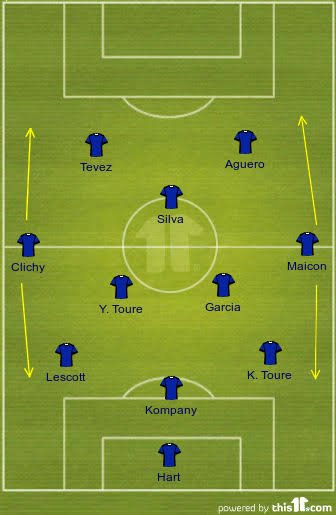
3-5-2 explained: a flexible and compact formation fans actually enjoy watching
If you’ve ever watched a game and thought, “How does this team soak up pressure and still threaten on the break?” the 3-5-2 might be the answer. It’s a compact, adaptable setup that uses three center-backs, two wing-backs, five midfielders, and two up front. It looks simple on paper, but it’s all about the balance between defending, controlling the middle, and delivering width on the break.
What the 3-5-2 actually looks like on the pitch
– Three center-backs in the back line. They stay tight and pick their moments to step out and challenge, forming a sturdy shield in front of the goalkeeper.
– Two wing-backs. These players run the channels, providing width when you’re attacking and dropping back to defend when you’re under pressure.
– Five midfielders. The middle is where the action happens, with a mix of holding, linking, and supporting roles. The wing-backs are often part of this midfield block, helping to control the game from the flanks.
– Two strikers. A dual threat up front. One tends to pull a bit wider or drop to link play, while the other looks to get in behind the defense.
The big idea
Keep that back line tight, let the wing-backs stretch the pitch, and use the five in midfield to own the middle of the park. The system is built for steady, controlled buildup through the spine, with the wing-backs supplying threats on the flanks. Two forwards give you a flexible diagonal of runs—one can drop to link play, the other can run behind the defense.
Pros and cons you’ll notice in real games
Pros
– A solid defensive base: three center-backs can handle central threats and keep the shape tight.
– Flexible transitions: you can switch quickly from defensive block to counter-attack through the wing-backs.
– Width when you need it: the wing-backs push high and create chances from wide areas.
– Good control of the middle: a five-man midfield can dominate possession and transition play when they stay compact.
Cons
– Wing-backs can tire: they have to sprint up and back all game.
– Gaps can appear if wing-backs push too far forward or lose a bit of discipline.
– Exposed wide areas if you lose width at the wrong moment, especially when the wing-backs aren’t tracking back.
What the players need to make it work
To make 3-5-2 sing, you want:
– Wing-backs with stamina and pace to run up and down for 90 minutes.
– Central midfielders comfortable with both keeping possession and breaking lines.
– Two forwards who understand each other’s movements and can time their runs to stay one step ahead of the defense.
3-5-2 vs 4-4-2: what changes on the field
– Defensive shape: 3-5-2 uses a back three; 4-4-2 sticks with a back four. The 3-5-2 is more compact centrally but can be dragged wide if the wing-backs are pulled out of position.
– Width sources: wing-backs in the 3-5-2 vs wingers/full-backs for the 4-4-2.
– Midfield numbers: 3-5-2 often puts five players into the middle, sometimes creating central overloads; 4-4-2 uses four midfielders, usually with a steadier, more direct mix.
– Attack options: 3-5-2 leans on the midfield buildup and wing crosses from the wing-backs; 4-4-2 often relies on two strikers and wingers to provide width.
– Pressing and transitions: 4-4-2 is typically balanced, able to press and drop into a mid-block; 3-5-2 tends to stay compact and spring counter-attacks via wing-backs; 4-4-2 sits somewhere in between.
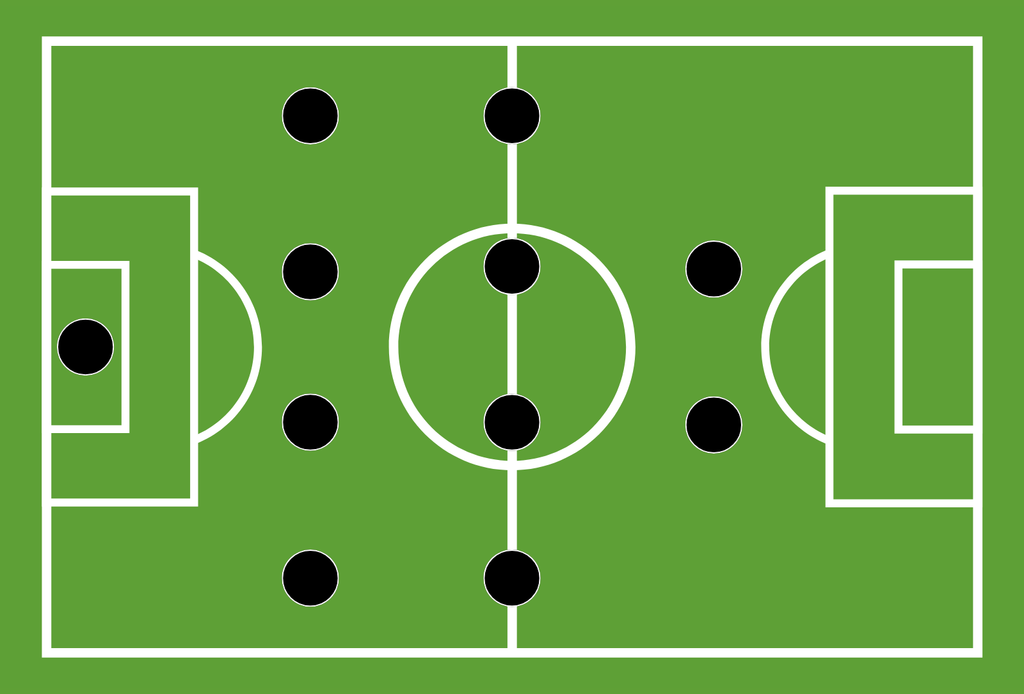
What the two up front do in the 3-5-2
– The two forwards work in tandem. One drops to link play and pull defenders out of position, the other makes runs behind the back line. It’s a linked-up duo, not just two separate finishers.
3-5-2 vs 4-3-3: what’s different in practice
– Defensive shape: 3-5-2 uses a back three that can shift into a back five; 4-3-3 uses a back four that can drop deeper or push wide.
– Width sources: 3-5-2 relies on wing-backs; 4-3-3 uses wingers plus full-backs joining the attack.
– Midfield numbers: 3-5-2 can overload central zones with five midfielders, while 4-3-3 features three central midfielders in a more vertical arrangement.
– Attack options: 3-5-2 keeps two forwards who work together, while 4-3-3 flaunts a front three that can stretch the defense.
– Pressing and transitions: 4-3-3 is known for high pressing and fast transitions, especially when the front three press as a unit. 3-5-2 stays compact and looks to spring counter-attacks with wing-backs involved. 4-4-2 sits in the middle, mixing pressure with solid shape.
Bottom line: if you’re choosing a system, think about your players
– 4-3-3 pushes width and pressing with a front three and a dynamic central trio.
– 4-4-2 keeps a steadier line, balanced wings, and a more direct approach.
– 3-5-2 blends central control with wing power, using the wing-backs to create chances.
Quick notes you can remember
– 3-5-2: wing-backs, two strikers, central control.
– 4-4-2: flat back four, two strikers, versatile wingers.
– 4-3-3: front three, attacking midfield trio, high press.
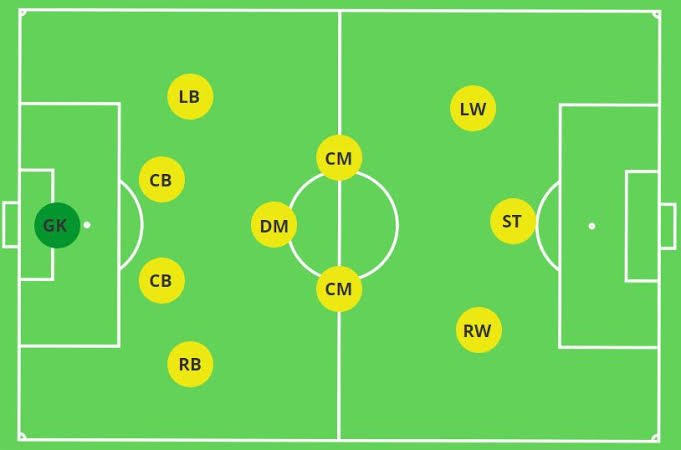
3-5-2 explained: key shape, pros, and cons (compact recap)
– Three center-backs provide a sturdy line and protect the space in front of the goalkeeper.
– Two wing-backs run the channels, delivering crosses and helping defend wide areas.
– Five midfielders control the tempo, support both defense and attack, and can overload central zones.
– Two strikers work in tandem, with one dropping to link play and the other making runs behind the defense.
– Pros: strong defensive base, flexible transitions, threat from the wings, good middle control.
– Cons: workload on wing-backs, potential gaps if wing-backs push too high or the midfield loses shape during quick counters.
For coaches, players, and fans who want to talk tactics
If you’re coaching or studying formations, the 3-5-2 is about patient, smart positioning more than flashy moves. It’s a system that rewards players who can sprint, stay disciplined, and understand when to press or drop off. If your squad has wing-backs with stamina and midfielders who are comfortable in tight spaces, it can unlock a lot of midweek and weekend fixtures.
SEO keyword ideas (for fans writing about it or coaches planning content)
– 3-5-2 formation explained and tactics
– 4-4-2 vs 3-5-2 comparison
– 4-3-3 formation advantages and drawbacks
– best football formations 3-5-2 guide
– 4-4-2 football formation history
– how to play 3-5-2 wing-backs
– 4-3-3 pressing system explained
– football formations explained for coaches
– tactical analysis 3-5-2 vs 4-3-3
A quick takeaway
If you’re chasing central control and want to stretch teams with wing-play, the 3-5-2 is your go-to. If you want a steadier plane with direct wing play, 4-4-2 or 4-3-3 might suit your players better. The real art is matching the system to your squad and game plan, then adjusting on the fly as the match unfolds. Now go watch a game with this lens and see which ideas you spot on the pitch.
Leave a Reply